
How to Pack a Kitchen for Moving: 7 Mistakes to Avoid
14 Oct 2026
News
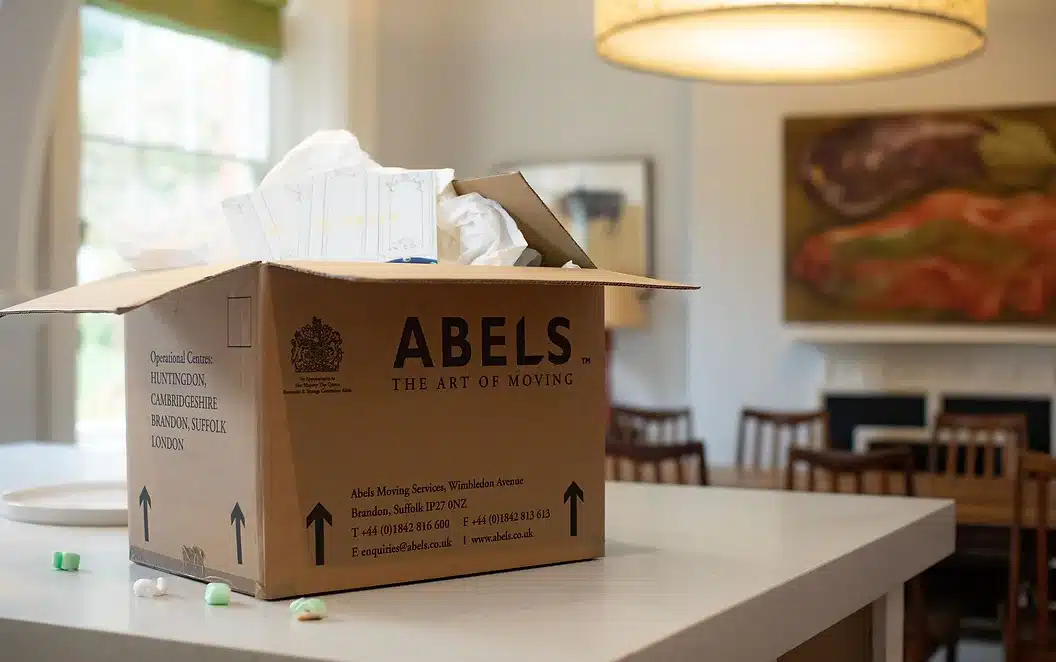
When planning how to pack a kitchen for moving, it is advisable to allow more time than you might expect. A kitchen fills more cartons than its size suggests, combining heavy cookware, fragile glassware, appliances that require preparation, food and a great many smaller items.
Care matters most with the pieces that cannot be replaced: a dinner service passed down through the family, wedding glassware, or ceramics collected over many years.
In our experience, most kitchen breakages can be traced to a small number of avoidable errors. The seven set out below are those our packing crews encounter most often, each with the method we use to prevent it. You may apply these yourself, or use them to decide whether to entrust the work to a professional team.
1. Leaving kitchen packing until the last minute
Because the kitchen is in daily use, it is often the final room to be packed. When it is left until the last evening, however, wrapping tends to be hurried, and hurried wrapping is a common cause of damage.
We recommend packing the kitchen in stages over one to two weeks:
- Two weeks before: special-occasion crockery, serving dishes, baking equipment, cookbooks, spare glassware and the contents of high cupboards.
- One week before: the majority of crockery and glassware, retaining one plate, bowl, mug and glass per person.
- Two to three days before: small appliances that will not be needed, pantry items you intend to keep, and most cookware.
- The day before: empty and defrost the fridge and freezer, and pack the remaining cooking items.
- Moving day: the kettle, mugs and the essentials box (see point 7).
2. Using the wrong boxes, or overfilling them
A large carton filled with tins or cookware is difficult to lift safely, and its base may fail under the weight. As a principle, heavy items belong in small cartons and lighter items in larger ones.
- Double-walled cartons should be used for crockery and heavier items. Single-walled boxes are frequently too weak once loaded.
- Each carton should be kept to a weight one person can carry comfortably.
- Tape the base across the central seam and along both edges, rather than with a single strip.
- Place the heaviest items at the bottom and fill any gaps with crumpled paper. If the contents shift when the carton is tilted, further padding is needed.
3. Packing glasses and plates incorrectly
Newspaper can transfer ink onto crockery, and plates stacked flat place their combined weight on the lowest piece. Both cause damage that often becomes apparent only on arrival.
How to pack glasses for moving
- Wrap each glass individually in clean, unprinted packing paper, beginning at one corner and rolling it.
- Support the interior with a loosely crumpled sheet.
- Pack glasses and stemware upright in a carton fitted with cardboard cell dividers.
How to pack plates for moving
- Wrap each plate separately, or in sets of two or three with paper between them.
- Stand plates on their edges, in the manner of records in a crate, rather than flat. They withstand pressure better this way.
- Line the base of the carton with crumpled paper and add a further layer on top before sealing.
These cartons should be marked FRAGILE and THIS WAY UP on the top and on at least two sides. Valuable ceramics and antique pieces may warrant individual assessment through our fine art and antiques removals service.
4. Packing knives and sharp utensils loosely
Unwrapped blades can cut through paper and card, and present a risk to whoever unpacks them. Each knife should be wrapped in several sheets of paper, or fitted with its original guard, secured with tape and packed with the others in a small, rigid carton marked SHARP.
Graters, mandolines, skewers and scissors require the same care. Pots and pans are more straightforward: nest them with a sheet of paper between each, and wrap the lids separately.
5. Overlooking appliance preparation
Appliances need preparing a day or more before the move, which is why they are often left too late. Correct preparation protects both the appliance and the items travelling alongside it.
- Fridge and freezer: empty, switch off and defrost at least 24 hours before the move, then dry thoroughly and leave the doors slightly open so the interior stays fresh. Before switching back on, consult the manufacturer’s guidance, as many advise leaving the appliance upright for several hours.
- Washing machine: drain, disconnect the hoses and fit the manufacturer’s transit bolts to secure the drum. Moving a machine without them risks damage to the drum.
- Dishwasher: run an empty cycle, drain and leave the door ajar to dry.
- Gas cookers and hobs: disconnection must be carried out by a Gas Safe registered engineer.
Should the transit bolts be missing, replacements for the specific model are best ordered well in advance.
6. Losing track of what is packed where
Unlabelled cartons make unpacking slow and uncertain. A clear system saves hours at the other end and makes the first evening in a new home calmer.
- Note the destination room and a brief contents list on the top and two sides of every carton.
- Number each carton and keep a corresponding list.
- Assign a colour to each room, and mark the matching door at the new property with the same colour.
7. Packing the essentials box too late
Once the vehicle has departed, you will still need to prepare a drink, eat and settle in for the first night. A clearly marked essentials box should travel with you, or be loaded last so that it is unloaded first.
A kitchen essentials box would typically contain:
- kettle, mugs, tea, coffee and long-life milk
- a plate, bowl and cutlery for each person
- washing-up liquid, a sponge and tea towels
- bin bags, kitchen roll and toilet roll
- scissors or a box cutter
- phone chargers and any medication
- for autumn and winter moves, a torch and dry cloths
Should you pack your kitchen yourself or engage professional packers?
A kitchen can be packed successfully without professional help, provided there is time to do so. The method above is sound, and the cost is one of materials and evenings rather than a packing fee.
Professional packing is often the better choice where:
- one to two weeks of evenings and weekends cannot be spared
- the kitchen is large, or holds a significant amount of glassware or valuable ceramics
- the move is long-distance or overseas, where cartons are handled more often
- you would prefer not to carry the risk of breakages yourself
If breakages are a concern, ask about MoveProtect at your survey. Cover for fragile items can differ depending on who packed them, so it is worth understanding your position before deciding.
What Abels packing includes
Our professional packing service may cover the whole home or the kitchen alone. A trained, uniformed crew arrives with double-walled cartons, clean packing paper, cell dividers and, where required, custom crates. The crew prepares appliances for transport, arranges a Gas Safe engineer where needed, and labels every carton by room and contents.
An experienced crew will typically pack a kitchen within a few hours, either the day before the move or on the morning itself. Everything packed is recorded on the inventory prepared at your home survey.
Abels has moved homes since 1958 and holds a Royal Warrant for removals and storage services, FIDI FAIM accreditation, and ISO 9001, 14001, 45001 and 27001 certification. Further detail is available on our accreditations page.
Kitchen checks before moving day
Food. In the final fortnight, plan meals around what remains in the cupboards and freezer. Unopened, in-date tins and dry goods may be donated to a local food bank where accepted. Open jars and bottles you intend to keep should be sealed in plastic bags. Your surveyor will confirm any items we are unable to carry.
Frozen food. Frozen food should not travel in the removal vehicle on a long move. It is best used up beforehand or moved separately.
Cleaning. Once cupboards are empty, wipe them down before the final day, while access is still clear.
Autumn and winter moves. Keep cartons off wet ground, protect the route through the property with suitable coverings, and ensure paths and doorways are well lit as daylight fades.
Your Next Step Starts Here
Get in touch with us in the way that's best for you, or complete the form below – we'll reach out with a customized moving proposal
 +44 1842 816600
Start your journey with Abels
A seamless experience awaits — simply leave your details, and we’ll be in touch shortly or at your convenience